Research
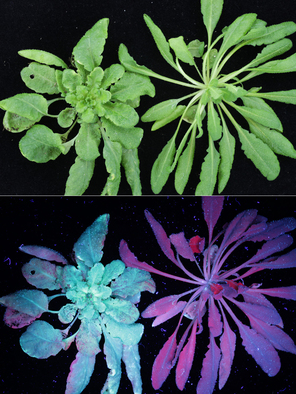
Professor Roger Innes; postdocs Sang-Hee Kim, Dong Qi, and Tom Ashfield; and graduate student Matthew Helm have modified a plant gene that normally fights bacterial infection to confer resistance to a virus as well as diseases caused by fungi, oomycetes, and nematode worms. The method is described in their paper in Science.
Read the IU news release Read the article
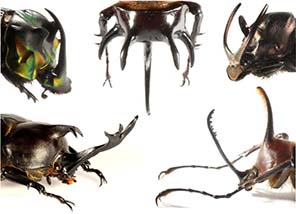
Professor Armin Moczek and his former postdoctoral research associate Teiya Kijimoto have significantly advanced understanding of the genetic pathways controlling the appearance of different physical traits in the same species depending on nutritional conditions experienced during development. Their work is reported in PNAS.
Read the IU news release Read the abstract
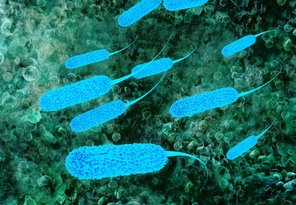
A study—led by Professor David Kehoe and conducted by Ph.D. student Joseph Sanfilippo and former Ph.D. student Animesh Shukla (both in Kehoe Lab) in collaboration with researchers in the United States and France—is the first to show how a process that improves light capture in marine cyanobacteria is regulated.
Read the IU news release Read the abstract
Professors Leonie Moyle and Matthew Hahn, along with former IU graduate student James Pease and postdoc David Haak, examine the complex genomic changes that accompany rapid speciation among wild tomatoes. Their study was published in PLoS Biology.
Read the IU news release Read the article
Professor Patricia Foster is the principal investigator and senior author on a study finding that a "gap in the armor" of DNA may allow an enzyme to trigger cancer-causing mutations. Also contributing to the study from IU Biology is Research Associate Jesse Townes.
Read the IU news release Read the article
Professor Mike Lynch and postdoctoral researcher Georgi Marinov co-authored 'The bioenergetic costs of a gene,' reported in the Proceedings of the National Academy of Sciences, describing for the first time how much total energy is needed to build and maintain a cell and how this scales with cell size.
Read the IU news release Read the abstract
McKinlay lab members—Tim Kremer, Breah LaSarre, Amanda Posto, and Jake McKinlay—have a paper in Proceedings of the National Academy of Sciences describing an efficient bacterial process for ethanol production that uses nitrogen gas instead of industrial fertilizers.
Read the IU news release Read the article
Honey bees may be one example of an animal microbiome where mom does not know best and bacterial transmission is social, not maternal, according to Assistant Professor Irene Garcia Newton and colleagues in their "Characterization of the honey bee microbiome throughout the queen-rearing process" paper published in Applied and Environmental Microbiology. Listen to the Indiana Public Media "Earth Eats" interview of Newton about her research.
Read IU news release Read the abstract
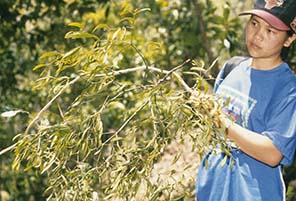
Professor Jeff Palmer led the study that discovered the first known instance of a plant or animal lacking several key genes involved in energy production in cells. Palmer, postdoc Elizabeth Skippington, research associate Danny Rice, and colleague Todd Barkman (W. Mich. Univ. at Kalamazoo) reported in the journal of the Proceedings of the National Academy of Sciences that the parasitic plant Viscum scurruloideum, a species of mistletoe, has the apparent ability to survive and thrive without several genes involved in the primary energy-producing pathway of oxygen-respiring organisms.
Read the IU news release Read the abstract
Kevin Cook, Thom Kaufman, Kathy Matthews, Annette Parks, and colleagues are co-authors on "Safeguarding gene drive experiments in the laboratory" in Science, urging caution in experiments driving genes into natural and laboratory populations.
Professor Armin Moczek and co-authors in the Proceedings of the Royal Society of London B, "The extended evolutionary synthesis: its structure, assumptions, and predictions." This publication has been selected by the editors of the Proceedings as a "Darwin Review," a once-a-year publication judged to be of "...very high interest to the whole diverse readership of Proceedings B, often being of particular relevance to strategic growth areas, importance to policy makers, and having a bearing on the public that fund our science."
Read the IU news release Read the article Read the Royal Society press release
From labs to fields, IU students and faculty are working to save honey bees. IU's "Keepers of the Bees" story includes honey bee studies by Assistant Professor Irene Newton and her graduate students Freddy Lee and Kayla Miller and features long-time beekeeper Professor Emeritus George Hegeman.
Read the IU story Watch the Newton video Watch the Hegeman video
Professor Greg Demas is co-author on a study that found that sexual activity (even outside the window of ovulation) causes immune system changes which increase chances of conception. The results could eventually influence recommendations for couples trying to get pregnant and could also potentially impact treatment for people with autoimmune disorders.
Professor Patricia Foster, Professor Haixu Tang, and colleagues have found that forces in the external environment and oxidation are the greatest threats to an organism’s ability to repair damage to its own DNA. The results are reported in the journal of the Proceedings of the National Academy of Sciences.
Read the IU news release Read the article
Work from Irene Garcia Newton's lab to create the first metatranscriptome of the honey bee gut has shed new light on how organisms work together and apart from one another to carry out the dominant function of the gut microbiome: carbohydrate metabolism.
Read the IU news release Read the IU Science at Work article
 The College of Arts